Image credit Unsplash
Digital media teams now have access to creative models that can generate polished images, video clips, audio, and 3D assets in minutes. That speed changes more than production schedules. It also affects how teams plan campaigns, test ideas and deliver personalized experiences across different channels.
Yet access to a powerful model doesn’t guarantee useful results. Creative teams still need clear standards, thoughtful workflows and human review. The new standard pairs rapid generation with consistent brand direction, practical quality controls and technology that can adapt as better models become available.
Creative production is becoming more flexible
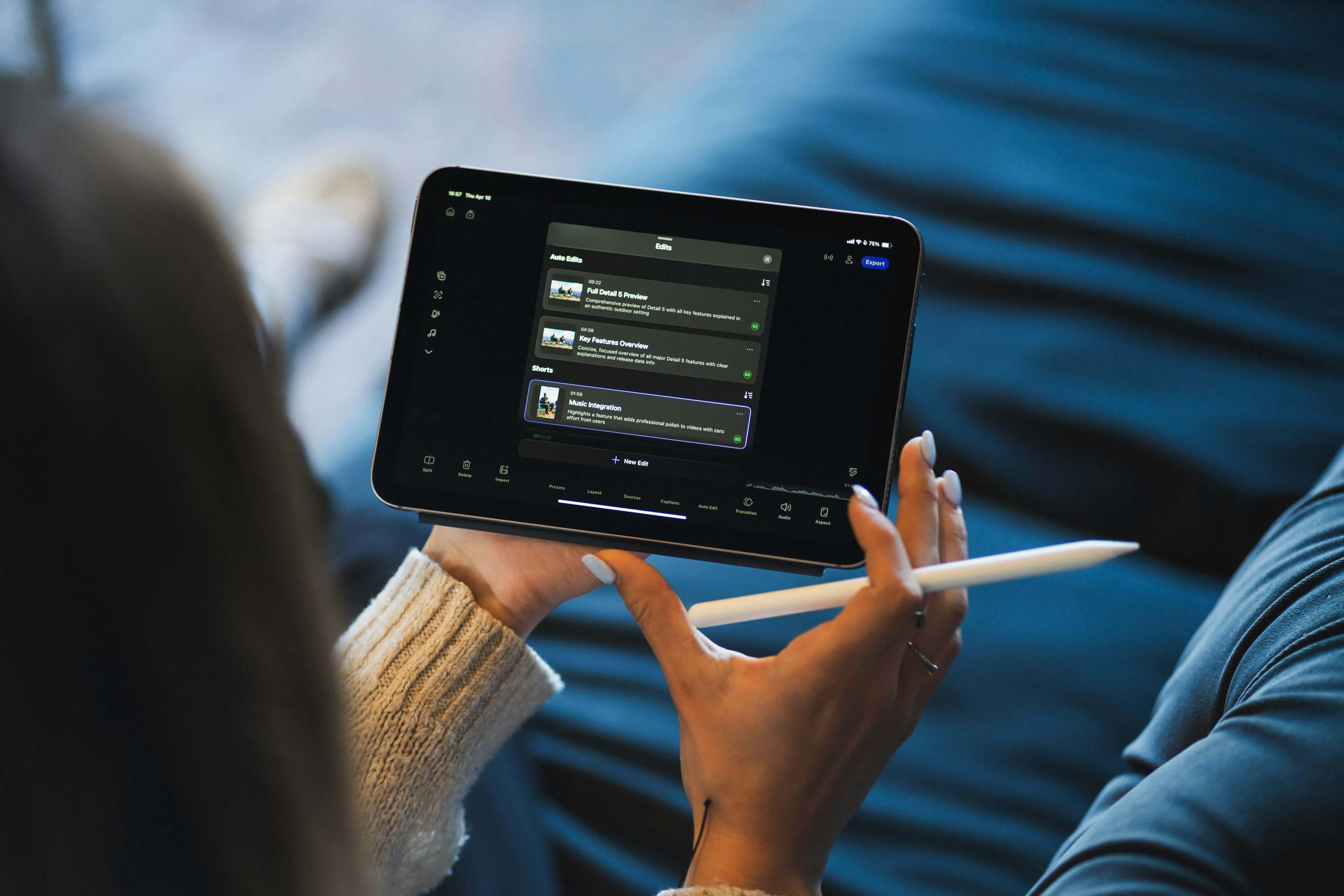
Traditional content production often moves through a fixed sequence: concept development, asset creation, internal review and final delivery. Each revision may require another round with designers, editors or production partners. Creative models can shorten that cycle by producing early concepts and variations while an idea is still taking shape.
A marketing team might generate six visual directions for a seasonal campaign before selecting two for manual refinement. A video producer could create short storyboard clips to test pacing before scheduling a full production. Product designers may also build rough 3D concepts that help stakeholders understand an idea more clearly than a written brief.
This flexibility gives teams room to explore without committing a large budget to every possibility. It also encourages collaboration because stakeholders can respond to something concrete. The strongest workflows treat generated media as material for review and refinement, with people making the final calls on tone, accuracy and brand fit.
Choose models around the work you need to do
Creative models have different strengths. One may produce realistic product scenes while another excels at stylized illustrations. Video models vary in clip length, motion quality and prompt control. Audio tools may specialize in speech, music, or sound design, while language models differ in context limits and instruction handling.
Start by defining a real production task. For example, a content team may need 15-second vertical clips for social channels, matching product images for an online catalog, and short descriptions for each item. That brief creates measurable evaluation points such as visual consistency, processing time, output dimensions and editing effort.
Developers and creators who need several media types can explore the latest industry-leading creative models through a unified API covering video, images, language, audio and 3D generation. Centralized access can make model testing easier because teams don’t have to build a separate integration for every experiment.
Test each option with the same five to ten prompts. Compare usable output rates, turnaround time, and the amount of manual correction required before choosing a model for production.
Build a repeatable creative workflow
Fast generation can create disorder when files, prompts and approvals aren’t organized. A repeatable workflow gives experimentation clear boundaries and makes successful results easier to reproduce.
Begin with a structured brief that defines the audience, format, channel, visual references, and required message. Store approved prompts alongside their settings and outputs, so other team members can see what produced a strong result. Version labels should identify the model, generation date and revision number. Those details become valuable when a model update changes its output style.
Human review belongs at several points in the process. A designer can check composition and brand consistency, while an editor verifies names, claims and on-screen text. Someone familiar with accessibility should review captions, contrast and audio transcripts before publication.
These practices matter as media habits continue to fragment. Deloitte’s digital media trends research examines how audiences divide attention among streaming, social platforms and creator-led content. A well-organized workflow helps one idea move across those formats without losing its identity.
Measure quality beyond visual polish
A striking asset can still fail if it doesn’t support the intended message. Useful measurement connects creative output to audience behavior and production efficiency.
For campaign assets, track click-through rates, completion rates, or qualified conversions alongside aesthetic feedback. For internal workflows, measure how long it takes to move from brief to approved draft. Teams can also record the percentage of generated outputs that reach publication and the average number of manual edits required.
Suppose two image models each create 100 product visuals. Model A produces more impressive first impressions, but only 35 images meet the brand’s layout rules. Model B produces 70 usable images with fewer corrections. The second model may offer greater production value even if its best individual image looks less dramatic.
Quality checks should also cover factual accuracy, unwanted visual artifacts, and consistency across a series. Keep a small benchmark set and rerun it when a provider releases an update. This simple practice reveals changes before they affect a live campaign or customer-facing feature.
Skills and governance still shape the outcome
Creative technology raises the value of people who can connect editorial judgment, design principles, and technical systems. Teams need contributors who understand how generated assets fit into a broader content strategy, not only how to write detailed prompts.
The field also rewards ongoing learning. USC’s overview of digital media industry trends highlights areas such as analytics, audience engagement and emerging technology. Those skills help creative professionals assess why an asset works and how it should change for a specific platform.
Governance should grow alongside capability. Document which tools are approved, what material may be uploaded, and who has authority to publish generated work. Establish rules for sensitive business information, recognizable individuals and copyrighted source material. Clear disclosure standards may also be appropriate when synthetic media could affect audience trust.
Assign ownership instead of leaving these decisions to individual contributors. A small review group with editorial, design, and technical representation can update standards as tools change. That keeps experimentation moving while giving everyone a consistent process.
Innovation works best as a steady practice
The rapid pace of model releases can tempt teams to switch tools every time a new demo appears. Constant migration creates technical work and makes output harder to compare. A better rhythm combines a stable production setup with scheduled periods for testing.
Teams might evaluate new models once per quarter using the same benchmark prompts, brand requirements, and performance measures. A model should move into production only when it improves a meaningful result, such as reducing editing time or producing more usable variations. Novelty alone isn’t a useful metric.
Keep space for small experiments outside the main workflow. A designer might test motion concepts for a static campaign, while a developer explores 3D previews for a product page. Promising experiments can then enter a controlled pilot with clear goals and an agreed review date.
The practical standard for digital media is becoming clear: generate quickly, judge carefully, and preserve the human decisions that give creative work its purpose. The teams that document those decisions will be ready for the next model without rebuilding their entire process.
Related Posts



Community manager at Visual Contenting. Jacqueline loves to talk about social media trends, new technology and how they help businesses accelerate their marketing efforts.