
Image Credit: Unsplash
A beautiful website can still remain nearly invisible in search results. Large images, polished animations and custom type may impress visitors, but search performance depends on signals that design alone cannot provide. If pages load slowly, hide useful copy or lack a clear structure, even an award-worthy layout can struggle to attract organic traffic.
The solution is to treat visual communication and search optimization as connected parts of the same publishing process. That starts with understanding where appearance can interfere with discoverability.
The Aesthetic Trap in Modern Web Design
Design teams often build around a dramatic first impression. A homepage may open with a full-screen video, a short slogan and an animated menu. The result looks sophisticated, yet it gives search engines little information about the company’s services, audience or expertise.
Some outdated design trends also create practical problems. Hidden navigation, intrusive overlays and heavy visual effects can make content difficult to reach. Large media files may delay the main content, especially for people using mobile connections.
Review each page as a visitor with a specific task. Can that person identify the topic, find the main navigation and reach the next useful page within a few seconds? Then review it as a search landing page. It should have a descriptive title, one clear primary heading and enough original copy to answer the visitor’s immediate question.
If limited capacity keeps these tasks sitting in a backlog, an outsourced service can help a marketing team get SEO done the right way while designers continue working on the site’s visual experience.
Search Crawlers Cannot Appreciate Typography
Typography creates hierarchy for human readers through size, weight, color and spacing. A search crawler needs structural HTML to understand that same hierarchy. Text styled to look like a heading may still be an ordinary paragraph in the code, while an actual heading tag may be used purely to enlarge decorative text.
Use one descriptive H1 for the main page topic, followed by H2 and H3 elements in a logical order. A service page for animated explainer videos, for example, might use sections covering the production process, typical delivery times, pricing factors and portfolio examples. That structure helps both scanning readers and search systems.
Images need similar attention. Add concise alt text when an image communicates useful information, but leave it empty when the image is decorative. Avoid placing essential copy inside banners because crawlers and assistive technology may not interpret it reliably.
The relationship between web design and SEO also extends to mobile usability, page speed and content organization. Typography can support those factors when it remains readable across screen sizes and doesn’t depend on oversized font files.
Practical Ways to Get SEO Done Fast
Start with pages that already matter to the business. A ten-page service site rarely needs a six-month redesign before search improvements can begin. Update the homepage, primary service pages and highest-traffic articles first, then use their results to guide later work.
A short audit can uncover the most urgent issues:
- Check that every priority page has a unique title and clear H1
- Compress oversized images and serve modern file formats where possible
- Add internal links between closely related pages
- Rewrite vague headings such as “What We Do” to name the actual service
- Confirm that key content works without animation or interaction
- Remove duplicate pages that compete for the same search intent
Keep each change tied to a measurable outcome. For example, record the current loading time, organic clicks and conversions for a page before editing it. Review the same numbers after four to eight weeks. Rankings can fluctuate, so look for a pattern across impressions, qualified visits and completed actions.
Speed also comes from setting boundaries. Fix technical blockers and weak page structure before debating small visual details that have little effect on usability or discovery.
Bridge Creative Teams with Search Execution
Designers, writers and SEO specialists often work from separate briefs. That separation creates predictable friction. Writers receive finished layouts with room for only 40 words, while designers receive late requests to insert long blocks of copy into carefully balanced screens.
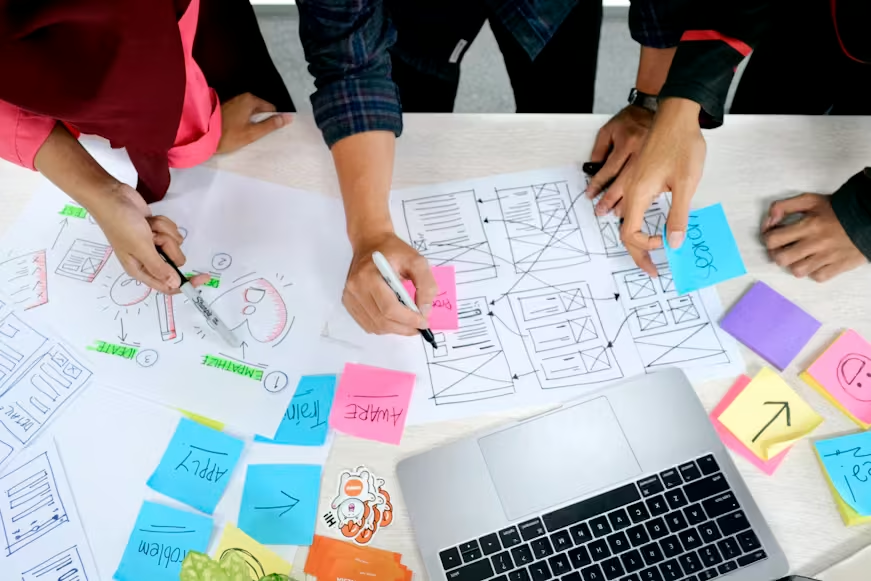
A shared page brief prevents much of that rework. Before wireframing begins, document the page goal, primary audience, search intent, required sections and desired action. Include technical needs such as heading order, image dimensions and internal link targets. Everyone can then solve the same communication problem from the start.
Content reviews should also include visual context. A writer needs to know if a sentence will appear over an image, inside a card or below an interactive tool. Meanwhile, an SEO reviewer should explain why a requested change matters instead of treating keywords and headings as fixed decorations.
Set one checkpoint at the wireframe stage and another before launch. At the first, confirm that the layout has room for useful information; at the second, test links, metadata, mobile behavior and indexability. Clear ownership matters too: assign one person to approve visual quality and another to verify search requirements, with a named decision-maker for conflicts.
A strong page should make its subject obvious in the layout, copy and underlying code. When those layers tell the same story, search visibility becomes part of the design system instead of a repair job after launch.



Community manager at Visual Contenting. Jacqueline loves to talk about social media trends, new technology and how they help businesses accelerate their marketing efforts.